






Your Torga eye test
Comfortable vision for every part of your visual day
Your eye test checks how well you see and how healthy your eyes are. Your optometrist starts by getting to know how you use your eyes: at work, on screens, on the road and at home. They explain each test as they go, then explain the results in plain language, so you leave understanding your eyes and what will help you see comfortably.
Book an eye test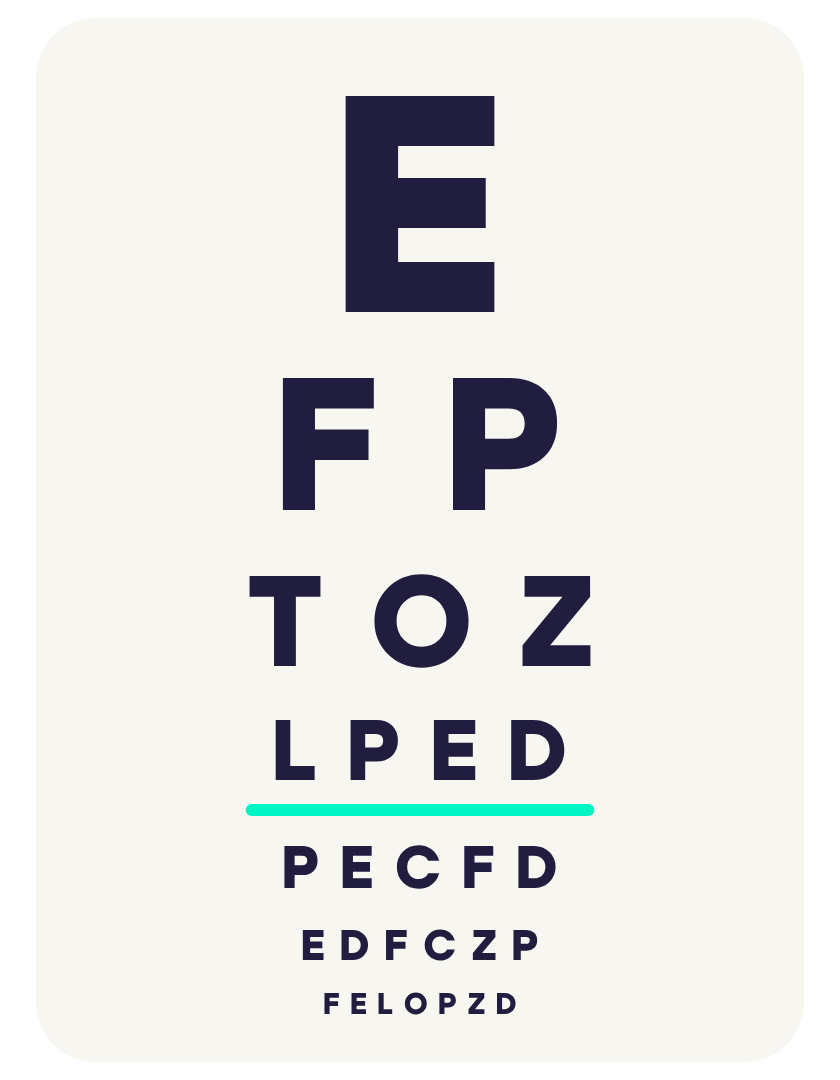
Your eye test, step by step
No two eye tests are quite the same, because no two people are. But most follow this flow, and your optometrist will explain each step as they go.
-
 1
Meeting your optometrist
We’ll introduce you by name and tell your optometrist why you’ve come, so you don’t have to tell your story twice.
-
 2
Getting to know you
Your optometrist asks why you’ve come, and how you see far away, at arm’s length and close up. They’ll ask about your health, any medication you take and your family’s eye health, and then about your days: your work and your screens, driving, reading and hobbies. Don’t be surprised if this takes a while: your answers shape everything that follows.
-
 3
Your current glasses
If you wear glasses, your optometrist checks their prescription and asks how they’re working for you, so they can see what’s changed since your last eye test.
-
 4
How well you see
You’ll read letters on a chart, far away and close up, with your glasses and without them. If letters aren’t easy for you, the chart can show numbers or pictures instead.
-
 5
Checks suited to you
Depending on what you’ve told them and what they see, your optometrist may do other checks, such as how your eyes move and work together, how your pupils react to light, and your colour vision or side vision.
-
 6
The health of your eyes
Your optometrist checks the pressure inside your eyes and looks at the front of your eyes through a microscope. Then they look at the back of your eyes, where the retina and optic nerve are. Where the practice has the equipment, they can photograph or scan the back of your eyes and show you what they see.
-
 7
Fine-tuning your prescription
Your optometrist tries lenses in front of your eyes, one at a time, and asks which is clearer: “one, or two?” There are no wrong answers. Then they put your new prescription in a trial frame, so you can look around and feel the difference for yourself.
-
 8
What it means for you
Your optometrist explains what they found in plain language, and makes sure they’ve answered the question you came in with. If you need glasses or contact lenses, they’ll recommend what suits each part of your day, and tell you what each option will mean for you. The choice is always yours.
Find a practice near you
Search by area or address, or let our store finder use your location to show the Torga practices nearest you, with their addresses, phone numbers and directions.


_400.jpeg)


Eye test price and medical aids
We’ll always tell you what your eye test costs before it starts. Torga practices accept most major medical aids.
Good to know
How long does it take?
The eye test itself usually takes 20 to 30 minutes, and a contact lens fitting about an hour. If you’d like to choose new glasses afterwards, allow a little extra time.
Do I need to book?
Booking online lets you choose your practice and a time that suits you, and you can book for your family too. Walk-ins are welcome whenever the optometrist is free.
I wear contact lenses. Is my eye test different?
It starts the same way, with a full eye test. A fitting then checks how the lenses sit on your eyes, and you try a pair before you buy. If you’re new to contact lenses, we’ll show you how to put them in, take them out and look after them, and see you again for a follow-up check.
Is a free screening the same as an eye test?
No. A screening is a quick check of whether you need a full eye test. It doesn’t check the health of your eyes the way an eye test does, and it doesn’t give you a prescription.
Before your eye test
Try to arrive a few minutes early. It gives you time to settle in and have a look around.
- When you arrive. One of our eyewear consultants will welcome you, check your details and your medical aid if you have one, and let your optometrist know you’re here. We welcome private patients as well as medical aid members.
- A Torga Tour. If you’re a few minutes early, your consultant will normally take you on a Torga Tour of our newest frame collections. If something catches your eye, they’ll keep it on a tray for you to try on after your test.
- A few questions. You may be asked to fill in a short questionnaire, on paper or on a tablet, about why you’ve come and how you use your eyes. Your optometrist will read it before you sit down, so you don’t have to start from the beginning.
- A first reading. A team member may ask you to look into an instrument that takes a quick reading of your eyes. It gives your optometrist a starting point.
- What to bring. Every pair of glasses you use, including reading, computer and prescription sunglasses; your contact lens details, if you wear them; a list of any medication you take; and, if you are a medical scheme member, your medical aid card.
After your eye test
If you need new glasses, your optometrist will introduce you to one of our eyewear consultants and go through their recommendations with you both, so nothing gets lost. Your consultant will show you what each lens does, then help you choose frames that suit you and your day. Take all the time you need.
Eye tests for children
Children don’t always know how well they should be able to see, so regular eye tests matter. Book an eye test for them the year before they start Grade 1, and then every year.
- Tests for their age. A younger child may be shown one letter at a time instead of a whole chart, or pictures or numbers if they don’t know their letters yet. From about eight, most children do the same eye test as an adult.
- At their pace. The optometrist explains each step and starts with the parts that feel least strange, so your child can relax.
- You’re welcome to stay. A parent or caregiver can stay in the room with them.
- How school is going. The optometrist will ask how they’re doing at school, because seeing well and learning go hand in hand.
How often to have an eye test
Your optometrist will tell you when to come back, and we’ll remind you when it’s time. As a guide:
- Adults: every year.
- Contact lens wearers: a check every six months, and a full eye test every year.
- Children, from the year before Grade 1: every year.
- Children in myopia management: every six months.
- If you have an eye or general health condition: as often as your optometrist advises.
Book your eye test
Choose your practice and a time that suits you, and book for the whole family.