





Understanding your vision
Near or Farsightedness
Why some things look blurred close up and others far away, and how glasses correct it.

In short
Short-sighted or long-sighted?
Both are about where the eye focuses light. When light focuses in front of the retina, distant things look blurred. When it focuses behind it, close-up things look blurred. Glasses or contact lenses bring the focus back onto the retina.
Near-sightedness, also called myopia
Short-sightedness (myopia)
Near-sightedness is also known as short-sightedness and myopia. Light focuses in front of the retina instead of on it. This causes distant objects to look blurred, while close objects look clear. You may also notice headaches and tired eyes.
Lenses for short-sightedness have minus (−) powers.

Far-sightedness, also called hyperopia
Long-sightedness (hyperopia)
Far-sightedness is also known as hyperopia. Light focuses behind the retina instead of on it. This causes close objects to look blurred, while far objects may look normal. If it is not corrected, comfortable focusing at all distances can become difficult, and you may notice headaches and tired eyes.
Lenses for long-sightedness have plus (+) powers.

Your lenses
Made for your prescription
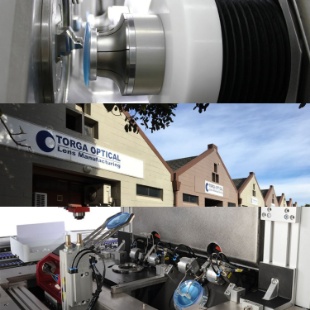
Made in our own lab
Freeform technology, developed in Germany, makes personalised lenses with great precision. We make all our own lenses in our lens laboratory in Maitland, Cape Town, with German precision technology.
Often with other changes
You might be short-sighted or long-sighted and also have astigmatism, or find that close-up focus changes from about our forties. Your lenses then combine the powers you need.
Frequently asked questions
Questions about how you see
How do I know which I am?
An eye test shows it. On your prescription a minus (−) sign means short-sighted, and a plus (+) sign means long-sighted. The bigger the number, the more correction you need.
Can contact lenses correct both?
Yes. Contact lenses always start with an eye test and a fitting, and your optometrist will tell you whether they suit you. About contact lenses.
Does a stronger prescription mean thicker lenses?
It can. We offer thinner and lighter lens materials for stronger prescriptions. Thinner is not always clearer, so we recommend the thinnest lens that is right for your prescription and your frame.